
 Menu
Menu| (Linear) Next >> |
| Strand7 Webnotes R3 | ||
|
Strand7 Webnotes are a comprehensive online library of resource materials covering Strand7 modelling, application, usage and installation, plus general background and theory of FEA. Access to the library is available to supported Strand7 users via a secure login and forms part of our Strand7 Support and Maintenance subscription service. To log in you will need your login details. Should you require information about your login details, please email us. Each Webnote in the library consists of a PDF describing the topic. Most Webnotes also include one or more Strand7 files to help illustrate the practical side. We aim to continually expand the Webnote library, so if there is a specific topic that interests you, or you have an idea for a Webnote that you would like to see, please email us. We welcome your comments and feedback about any Webnotes that you download. We are also interested in hearing from you should you find any errors in them or require further clarification. |
||
| Recent Additions | ||
 1.6 MB |
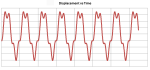
ST7-R3.10.20.24 Harmonic Response Analysis with the Linear Transient Dynamic Solver When a linear dynamic system, initially at rest, is excited by a single sinusoidally varying external force or base movement, the system will exhibit two phases of response: an initial irregular transient response followed by a steady state sinusoidal response at constant amplitude. |
|
 0.7 MB |
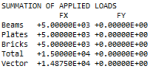
ST7-R3.20.10.6 Nonlinear Static Log File Load Summation The information provided in the SUMMATION OF APPLIED LOADS section of the solver log file can be useful for model checking and for debugging nonlinear analyses. |
|
|
1.0 MB |
ST7-R3.20.10.12 Nonlinear Boundary Conditions This Webnote examines two types of nonlinear boundary conditions in Strand7: Point Contact elements and Compression-only element Support attributes. |

|
|
4.3 MB |
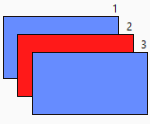
ST7-R3.40.35.18 Modelling Laminated Glass Laminated glass is a composite panel in which adjacent panes of glass are joined by a polyvinyl butyral (PVB) interlayer that is typically thinner and more flexible than the glass panes. This Webnote examines two approaches for modelling a laminated glass panel. |
|
| (Linear) Next >> |